
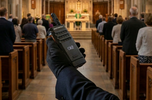
The 5 Best Two-Way Radios for Church Security Teams
, by Jesus Moraga, 10 min reading time
, by Jesus Moraga, 10 min reading time
Church security teams operate in a unique environment: they need to stay in constant contact while remaining unobtrusive in a space where people expect calm and reverence. Whether you're covering a single-building sanctuary or a multi-structure campus during weekend services, the right two-way radio makes the difference between a coordinated response and a missed communication.
This guide covers five professional-grade two-way radios suited to church security use, what to look for when selecting a radio for your team, and how to implement a radio program that actually works.
Each of the radios below is available through our inventory as an authorized reseller of Motorola Solutions, Hytera, and Icom. They're selected for their audio clarity, durability, discreet form factor, and security-relevant features.
Best for: Plainclothes security and front-of-house teams
The Motorola SL300 is less than an inch thick, making it one of the slimmest professional two-way radios on the market. This matters for church security; when your team needs to move through a congregation without drawing attention, a compact, low-profile radio is a practical advantage.
The SL300 operates on UHF (Ultra High Frequency), which penetrates walls and multi-room structures effectively. This is important in large churches with multiple wings, basements, or overflow spaces. It supports MOTOTRBO digital technology, giving your team access to digital voice clarity, privacy features, and text messaging. Battery life supports a full day of services without recharging.
Key specs: UHF digital (MOTOTRBO), ultra-slim profile, digital encryption, up to 1,000 contacts
Best for: Teams that need both analog and digital capability
The Hytera BD502i Digital Portable Two-Way Radio runs on DMR (Digital Mobile Radio) standards while also supporting analog mode, which means it can communicate with radios your team may already own during a transition to digital. It's compact, lightweight, and simple enough for volunteer team members to operate without extensive training.
With 48 channels across 3 zones, you can assign dedicated channels by area of coverage - sanctuary, parking lot, lobby, children's wing - keeping communications organized during busy services. It supports basic encryption for private team communications, and its battery handles extended multi-service days comfortably.
Key specs: Dual analog/DMR digital, 48 channels / 3 zones, IP54 dust and water resistance, long-duration battery
Best for: Outdoor coverage and campus perimeter monitoring
The Icom F2000 Analog UHF Portable Two-Way Radio delivers 4 watts of UHF output and carries an IP67 rating — fully sealed against dust and capable of withstanding submersion in up to 1 meter of water. For a church security team covering parking lots and outdoor areas through all seasons and weather conditions, that level of protection matters.
The F2000 also includes emergency signaling features, allowing team members working alone in a parking structure or at a remote entry point to quickly alert the rest of the team. Basic voice encryption keeps communications from being easily monitored. It's a durable, straightforward radio that's reliable in demanding conditions.
Key specs: 4W UHF output, IP67 rating, basic voice encryption, emergency signaling, compact form factor
Best for: Budget-conscious digital deployments and large volunteer teams
The Hytera BD302i Digital Portable Two-Way Radio weighs just 5 ounces and offers an accessible entry point into DMR digital communication. Its dual-mode auto-detect switches automatically between analog and digital signals, so it works alongside your existing analog radios while you build out a digital fleet over time.
With 48 channels across 3 zones and a 2200mAh battery delivering up to 16 hours in digital mode, it handles a full day of services without interruption. IP54 protection and MIL-STD-810-G shock resistance keep it functional through everyday use. For large volunteer security teams, it delivers the essential features - clear digital audio, channel organization, and VOX hands-free capability - without unnecessary complexity.
Key specs: UHF (400-470 MHz), DMR digital + analog auto-detect, 48 channels / 3 zones, 5 oz, IP54, MIL-STD-810-G, 16-hour battery, VOX
Best for: Usher teams and light-duty coordination roles
The Hytera TC-320 Analog Portable Two-Way Radio weighs under half a pound and withstands a 5-foot drop onto concrete - it's built tougher than its size suggests. For ushers, greeters, or hospitality volunteers who double as a first line of awareness, the TC-320 gives them a reliable connection to the security team without the bulk of a full tactical radio.
It offers up to 15 hours of battery life, 16 channels, and crisp audio output - more than enough for a full Sunday schedule including multiple services. Its IP54 rating handles outdoor conditions, and its straightforward design makes it approachable for team members who aren't radio-experienced.
Key specs: Sub-0.5 lb weight, 5-foot drop resistance, IP54, 16 channels, up to 15-hour battery
Churches are increasingly prioritizing safety. Research from the FBI shows that houses of worship are not immune to the incidents that affect other public gathering spaces, and many congregations have responded by forming dedicated security volunteer teams.
A dedicated radio system is a critical part of that response infrastructure. Compared to cell phones, two-way radios offer instant push-to-talk communication with no dialing, no cell network dependency, and no delays. During an active incident, those seconds matter.
Two-way radios also allow for group communication because one transmission reaches the entire team simultaneously. That kind of coordinated awareness isn't possible with a phone. For more on how radios compare to other communication options for security operations, see our breakdown of two-way radios for security and event staff.
Discreet form factor. A slim, low-profile radio doesn't disrupt the environment. Earpiece compatibility is a strong secondary feature and it lets team members receive transmissions without broadcasting them to the congregation.
UHF frequency band. Most church environments - sanctuaries with thick walls, multi-story buildings, basements, connected structures - benefit from UHF radios. UHF wavelengths penetrate building materials more effectively than VHF, maintaining coverage through obstacles that would degrade a VHF signal indoors.
Encryption. Security team communications should be private. Look for radios with basic voice encryption at minimum. For higher-security environments or larger campuses, digital radios with advanced encryption options are worth the investment. Our guide to encryption options for two-way radio communications covers the available standards in more detail.
Emergency features. Lone worker alerts, panic buttons, and emergency signaling functions protect team members operating in isolated areas: parking structures, remote entry points, or overflow buildings.
Battery life. Church security shifts often run from early setup through the last service - easily 8 to 10 hours. Choose a radio whose battery covers the full operational window without a midday recharge.
Ease of use. Volunteer team members aren't always radio-experienced. Radios with clear, intuitive controls reduce training time and minimize operational errors during high-pressure situations.
Both digital and analog two-way radios are viable for church security. The right choice depends on your team's size, budget, and communication requirements.
Analog radios are simpler, typically more affordable, and interoperate easily with other analog equipment you may already have. Models like the Hytera TC-320 and Icom F2000 are solid analog options for teams that need reliable, no-fuss communication.
Digital radios offer clearer audio at the edge of range, support for encryption, and more advanced features like text messaging and individual calling. DMR-standard radios like the Hytera BD502i can operate in analog mode for backward compatibility, making them a strong upgrade path if you're growing your program. The Motorola SL300's MOTOTRBO platform adds integration features useful for larger, multi-campus operations.
For most small-to-mid-sized church security teams, a mix of digital radios for team leads and analog radios for volunteers is a practical and cost-effective approach.
If you're starting from scratch with a small volunteer team, analog is a low-cost, low-complexity entry point. As your program grows, digital radios can be added for team leads without replacing your existing analog units, provided you choose a dual-mode radio like the Hytera BD502i Digital Portable Two-Way Radio that bridges both.
Assign channels by zone. Map your campus and assign a dedicated channel to each coverage area: main sanctuary, overflow room, parking, lobby, children's ministry. This keeps traffic organized and helps teams respond to the right area quickly.
Establish communication protocols. A radio is only as effective as the discipline around it. Train your team on clear transmission language, when to use open channels vs. direct calls, and how to signal an emergency without creating panic.
Use earpieces where appropriate. For plainclothes team members in the sanctuary, a clear acoustic tube earpiece maintains communication without broadcasting transmissions to nearby congregants. Earpieces also support hands-free awareness in high-traffic areas.
Conduct pre-service radio checks. Before every service, run a channel check with all active team members. Confirm battery levels, coverage, and that channels are clear. This takes under five minutes and prevents surprises mid-service. If a radio isn't holding a charge or is picking up interference on a specific channel, you want to know before the service starts, not during it.
Coordinate with local law enforcement. Many church security programs maintain a relationship with their local police department. Knowing whether your radios can be monitored or need to interoperate with public safety systems will inform your radio selection. For campuses using crowd management protocols across multiple access points, see our guide to two-way radios for crowd control and event management.
Coverage gaps caused by building construction are the most common challenge. Thick concrete walls, metal roofing, and large sanctuaries can all degrade signal. UHF radios address this most effectively for indoor environments. A site walkthrough before deploying your radio system helps identify dead zones so you can adjust channels, power settings, or repeater placement accordingly.
Professional security personnel typically use licensed UHF or VHF two-way radios from manufacturers like Motorola Solutions, Hytera, and Icom. Models with digital encryption, emergency signaling, and durable IP-rated housings are common in professional security deployments. Consumer-grade radios aren't designed for the demands of security coordination and lack the reliability and privacy features that professional environments require.
Effective church security is a layered approach: trained volunteer security teams, controlled access points, situational awareness protocols, and reliable communication equipment working together. Two-way radios are a foundational part of that communication layer. The right radio system allows your team to coordinate in real time, respond to incidents quickly, and maintain coverage across the full campus without relying on cell networks.
Church security teams need radios that are discreet enough for the environment, durable enough for real-world use, and clear enough to support split-second communication. Whether you're equipping a small volunteer team with simple analog radios or building a larger digital system for a multi-campus operation, the five options above cover the range of what most church security programs need.
Start with your environment and your team's experience level, then match the radio's features to those realities. Explore our full selection of professional handheld two-way radios to find the right fit, or contact us directly if you'd like help configuring a system for your campus.


